An effortless, ancient practice grounded in modern neuroscience. Five sessions — self-sufficient for life.
"I'd tried every app, every breathing technique. I thought I just wasn't someone who could meditate. Rich changed that in the first session."
You're capable, high-functioning, and by most measures — fine. But there's a persistent hum underneath it all. The day ends and your mind keeps going. Sleep comes, but not the deep kind. You wake at 2am with a full to-do list already running.
You've probably tried things. An app. A breathing exercise. A class. They help for a moment, then life gets busy and you forget, or it feels like just another thing to maintain.
The nervous system is running in a kind of sustained low-grade alert. And until that changes at a physiological level — not just a mental one — the restlessness doesn't fully go away.
A calm mind is the byproduct of a calm nervous system — not the other way around.Rich Muir — Vedic Meditation Teacher, Currumbin Valley
No concentrating. No imagining. No clearing the mind. No sitting cross-legged. No willpower required.
Asks you to focus, concentrate, watch your thoughts, return when your mind wanders.
It feels like effort. Sustained over years, that effort is exactly what people give up on.
You receive a personal mantra and a technique that allows the mind to settle on its own.
Nothing to concentrate on. Nothing to control. Nothing to fail at. It works because there's no effort to give up.
Vedic Meditation goes after the cause, not the symptom. The course works directly with the nervous system — not with thoughts, not with willpower, not with mental effort. Calm flows from the body up, not the mind down.
During Vedic Meditation, the body enters a state of physiological rest measured as 2–5 times deeper than sleep — distinguished by significantly reduced oxygen consumption and metabolic rate.
— Wallace, R.K. (1970). Science, 167(3926); American Journal of PhysiologyA cohort study of 2,000 practitioners vs 600,000 matched controls found an 87% reduction in hospitalisation for cardiovascular disease, and a 56% reduction across all major disease categories.
— Orme-Johnson, D.W. (1987). Psychosomatic Medicine, peer-reviewedVedic Meditation is one of the most ancient and extensively studied contemplative practices in the world — with a continuous lineage of direct transmission from teacher to student.
— Vedic tradition, documented through oral and written lineageThe Transcendental Meditation technique — the same tradition as Vedic Meditation — is among the most researched meditation practices, with over 600 peer-reviewed studies published worldwide.
— Maharishi University of Management Research InstituteHow it works
Four sessions to learn and establish the technique — group courses across one weekend, private courses across 2 or 4 days. A fifth session check-in follows 2 weeks later. You finish fully confident to practise independently, with Rich's ongoing support as your practice evolves.
You receive your own mantra — a specific sound selected just for you — and learn the core effortless technique in a relaxed, private setting.
Sat · 11:30am–1:00pmWe review your first sitting, refine the mechanics, and begin exploring how to weave meditation into daily life without effort or discipline.
Sat · 2:00–3:30pmUnderstanding why this works accelerates the benefits. We explore the neuroscience of stress, rest, and what sets Vedic Meditation apart from every other approach.
Sun · 10:30am–12:00pmRefinement, integration, and the long view. You leave with complete confidence in your independent practice — and Rich's ongoing support as life evolves.
Sun · 1:00–2:30pmA short follow-up 2 weeks after the weekend. We review how your practice is settling, refine anything that needs attention, and confirm you're fully on track.
2 weeks later · 20 minClient Stories
"Meditation has become my anchor in moments of difficulty — including when I faced a devastating health diagnosis. Through those months, it gave me the steadiness I needed to keep moving forward. Rich's ongoing support helped me carry that inner strength into every part of my life."
"This has honestly changed my life. I'm a calmer, more present human being. Sleep improved, stress reduced — all within weeks of starting."
"Effortless and effective with palpable benefits within days. A twice-daily ritual that becomes a life-changing practice. I can't recommend it enough."
"Rich is an amazing teacher. His course significantly changed my mental well-being. I haven't felt this un-anxious in years. Thanks Rich."
"We felt at ease from the very first session. Rich gave us not only the technique but a deep understanding of the science behind it."
"Life has been the best it's been in years. My practice is now a non-negotiable, no matter where I am or how I'm feeling that day."
3-minute self-assessment
Six honest questions to help you understand what your nervous system is carrying — and whether this is the right fit for where you are in life.
When you wake between 2 and 4am, your mind is usually...
After a demanding day, how long does it genuinely take to feel like yourself again?
Have you tried meditation or mindfulness before?
Where does stress most tend to show up for you?
If you felt genuinely rested — truly restored — what would change most?
What feels most true for you right now?
Rich reviews answers personally. Your result includes an honest note on what your patterns suggest and whether this practice is likely to help.
Your answers are private. No sales calls, no automated sequences — just an honest, personal response. Unsubscribe anytime.
Based on your answers, you're carrying a significant stress load that's been building for some time. The patterns you described are exactly what Vedic Meditation addresses most effectively.
The research is clear: the deeper rest this practice produces begins releasing accumulated stress from the first session. Most people with your profile notice a meaningful shift within the first week.
You're carrying real stress but you're still in the research phase — and that's completely fine. Your answers suggest Vedic Meditation could genuinely help, but you want to think it through first.
A free 20-minute conversation with Rich — no obligation — is usually enough to clarify whether this is the right fit for you right now.
Based on where you are right now, committing to a 4-session course and a twice-daily practice would likely feel like another thing on an already full plate. Vedic Meditation works because you give it your attention — not because you squeezed it in.
That doesn't mean it's wrong for you — it likely isn't. Come back when life has a little more space. In the meantime, Rich's free guide on managing stress without a formal practice is a useful starting point.
This is for you if
Honesty matters here
The outcomes
Not promises — these are the documented, reproducible outcomes of 20 minutes twice a day, practiced consistently. Most people feel the first shifts within a week.
Not through distraction, but through rest deeper than sleep. The body releases accumulated stress physiologically. Cortisol levels drop measurably.
The practice calms the nervous system so completely that sleep onset improves and night-waking decreases — often within the first week.
Clients consistently describe thinking more clearly, deciding with less rumination, and a reduction in mental fog within 2–4 weeks.
Reactions soften. The gap between stimulus and response widens. You still feel everything — but from a more grounded, stable place.
When stress stops draining the system, energy is freed up. Most people need noticeably less caffeine within 3–6 weeks of regular practice.
The nervous system governs immunity, blood pressure, mood, and digestion. Calming it consistently creates a ripple well beyond the 20 minutes you sit.
The Teacher
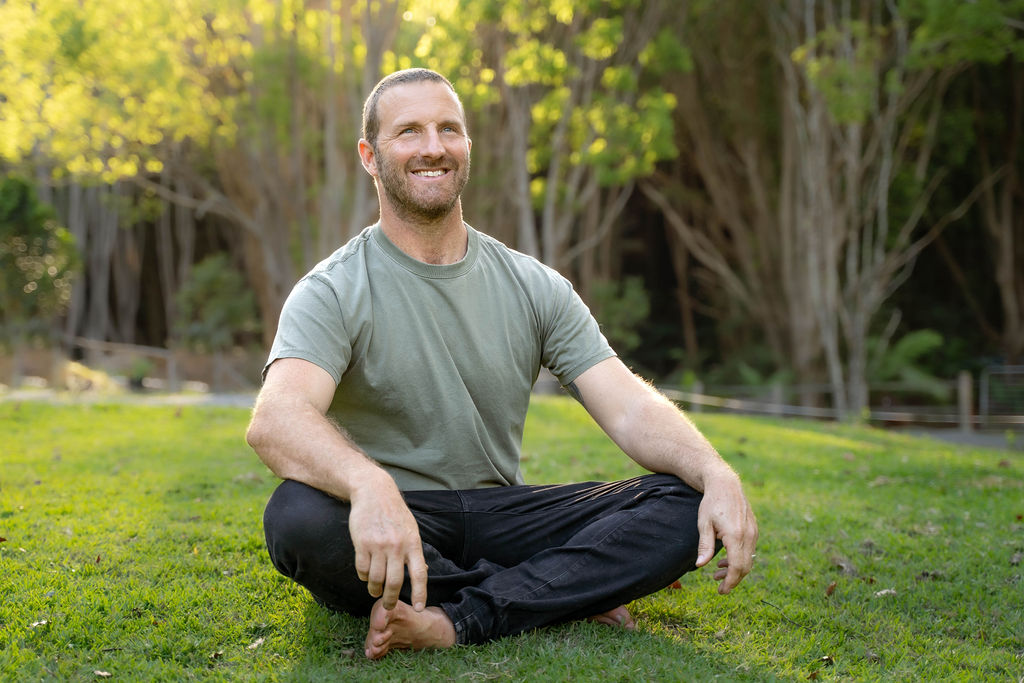
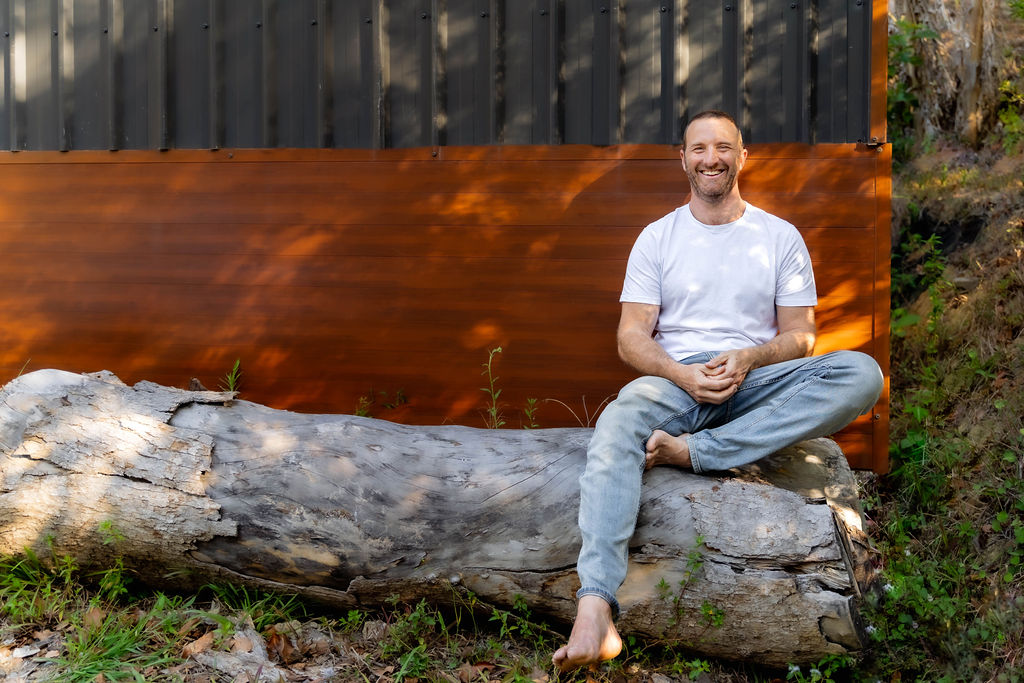
Hi, I'm Rich. I've been teaching Vedic Meditation on the Gold Coast for 8 years — working with over 500 people to help them find their way back to genuine calm, better sleep, and a nervous system that's no longer running on empty.
Based in Currumbin Valley, I've been meditating for nearly 20 years myself. My Honours degree in Psychological Science — with a thesis specifically on stress, the respiratory system, and wellbeing — means the way I teach is rooted in both a 5,000-year tradition and modern evidence.
I work with busy professionals, parents, people in burnout, and anyone who's tried apps and found them hollow. No trends. No forcing the mind. Just a timeless technique, taught properly, that works for life.
A guided nervous-system programme
This goes beyond learning to meditate. Over two days in Currumbin Valley you build a holistic way of calming and regulating your own nervous system — and because the teaching is shaped by a personal assessment and live breath and cardiac readings, it follows where your physiology actually is, not a fixed script. And I stand behind where it gets you.
More than a technique. You leave with the practice itself, the skill of reading your own body's signals, and functional breathing to interrupt stress where it begins.
A pre-course assessment and short cardiac and respiratory readings across the weekend mean the teaching adapts to your nervous system — personal, not one-size-fits-all.
Assessed for fit before you're accepted, supported until calm genuinely lands in your body, or your fee returned. That's the commitment.
Just want to learn the meditation technique itself? The standard four-session course is the simpler path in.
A 20-minute call to understand where you are, answer your questions honestly, and see if this is the right fit — for you, right now. No pressure. No script. Just an honest conversation.
Via Zoom or in-person · Currumbin Valley, Gold Coast